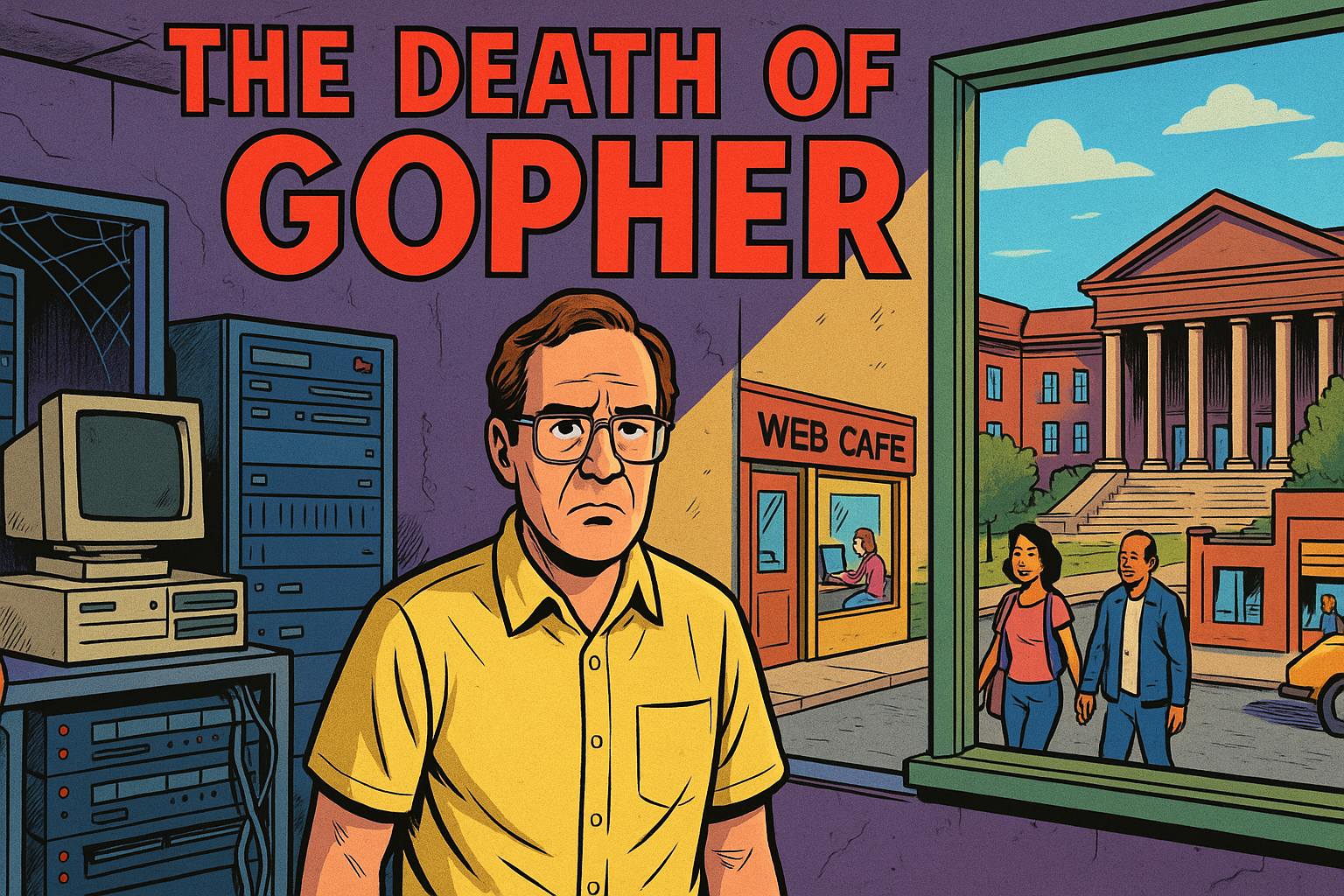
A graphic novel story of how lack of systems thinking inspired the World Wide Web
Through the lens of the Gopher protocol's rise and fall, this story explores systems thinking principles and how openness became the internet's defining characteristic.
The University of Minnesota's attempt to monetize the Gopher protocol in 1993 shattered trust in what had become the internet's most popular information system, illustrating a reverse "Tragedy of the Commons".
Tim Berners-Lee's response was to place the World Wide Web into the public domain, ensuring it would remain free and open forever. This decision created the trust necessary for massive network effects.
Follow the dramatic events that led to Gopher's rise and ultimate fall, and the Web's triumphant emergence.
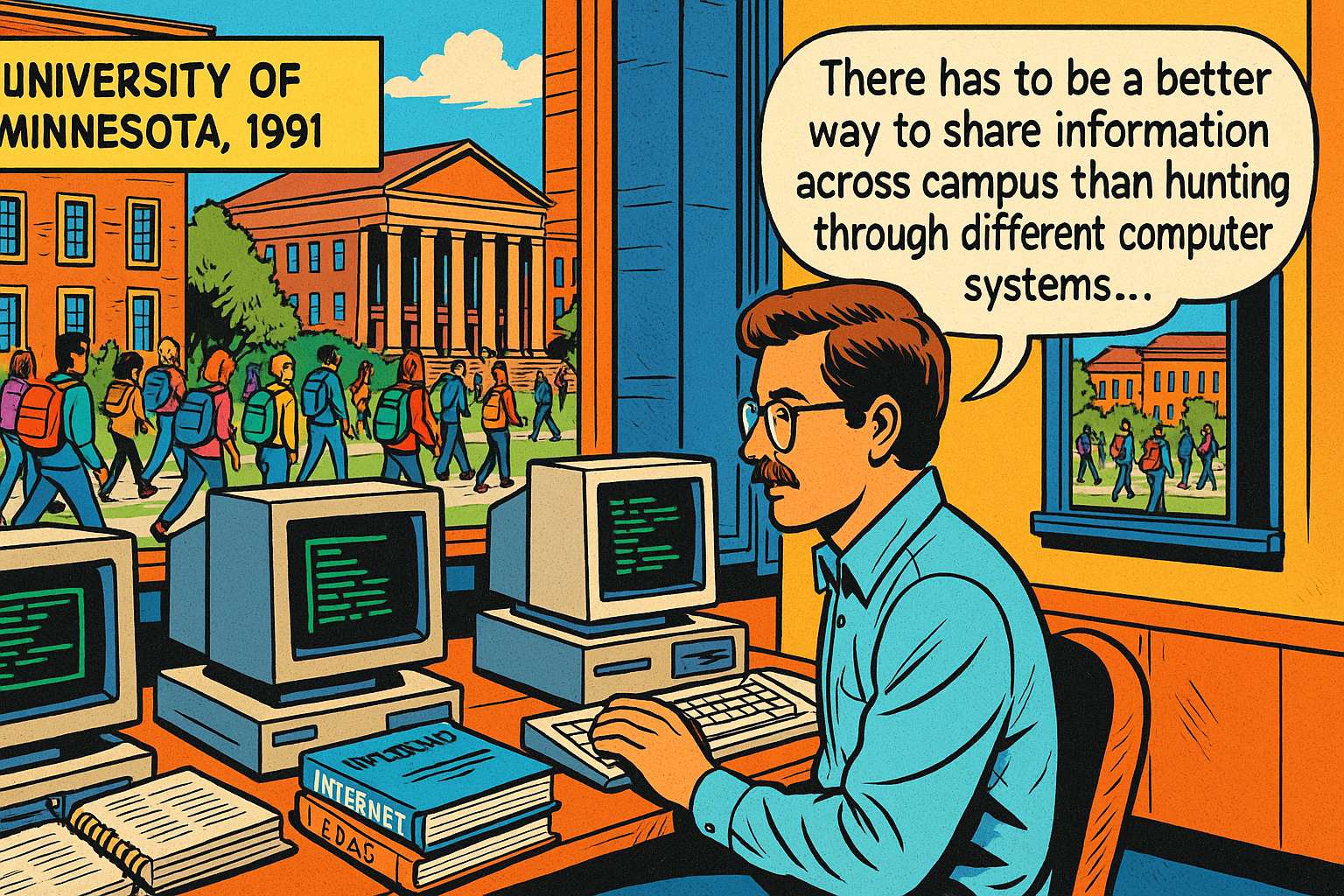
In 1991, Mark McCahill at the University of Minnesota envisioned a simple, menu-driven system to organize scattered information, setting the stage for a new innovation that would become the Gopher protocol.
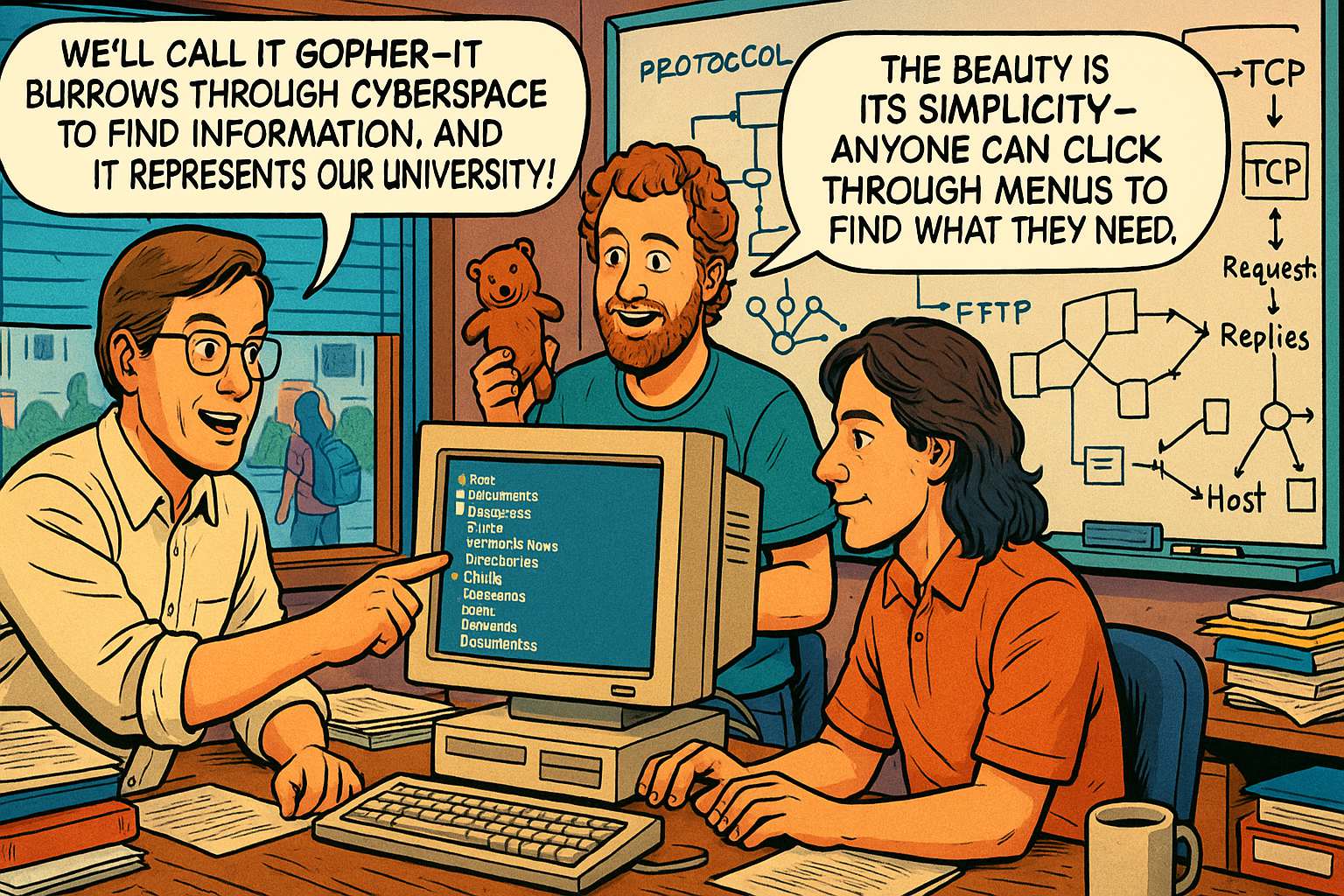
Mark McCahill's team developed an elegantly simple system with hierarchical menus, making it highly accessible and easy to use for navigating the early internet's information resources.
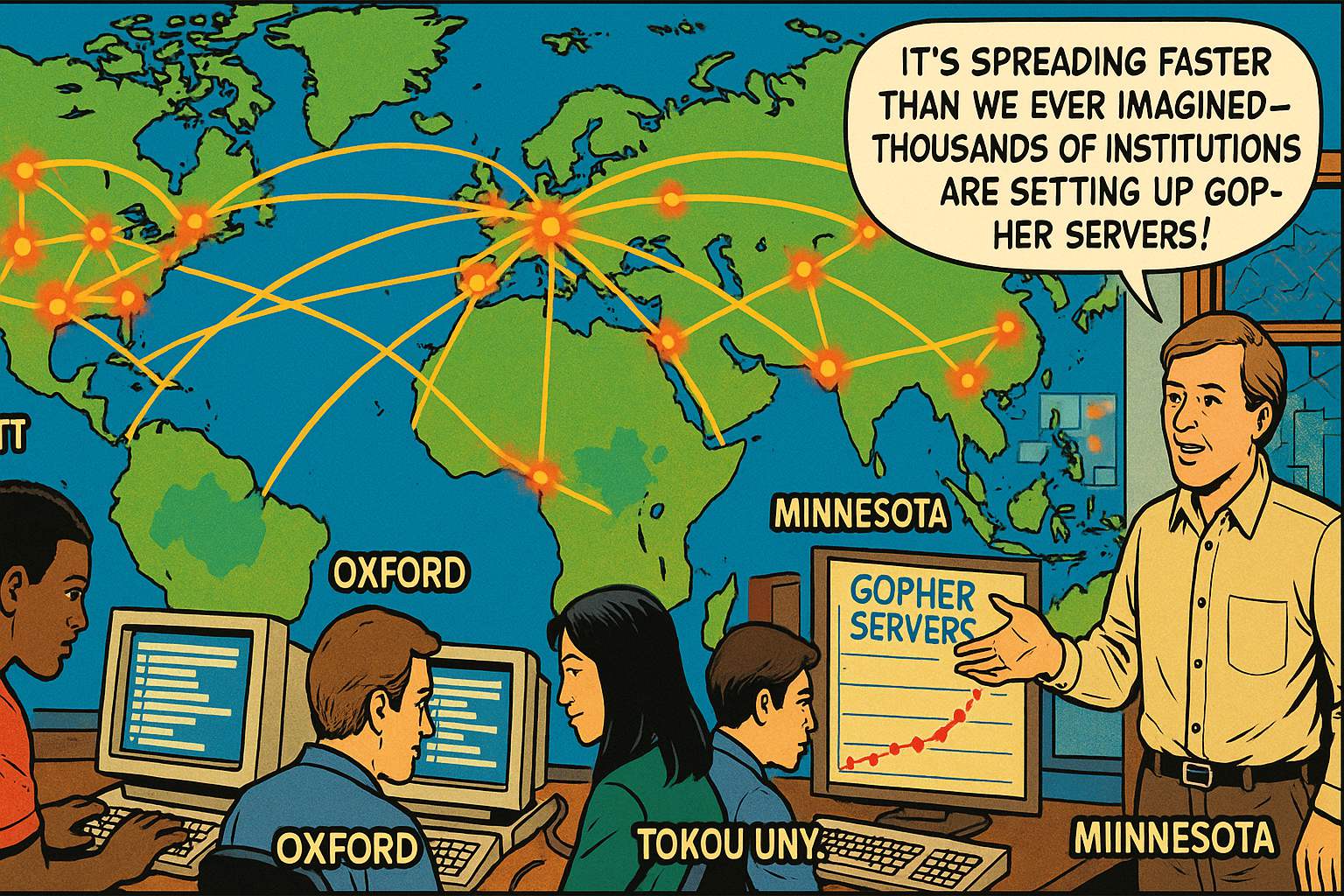
By 1993, Gopher had exploded across the academic community. Network effects were in full swing - each new server made the entire system more valuable, driving exponential growth.
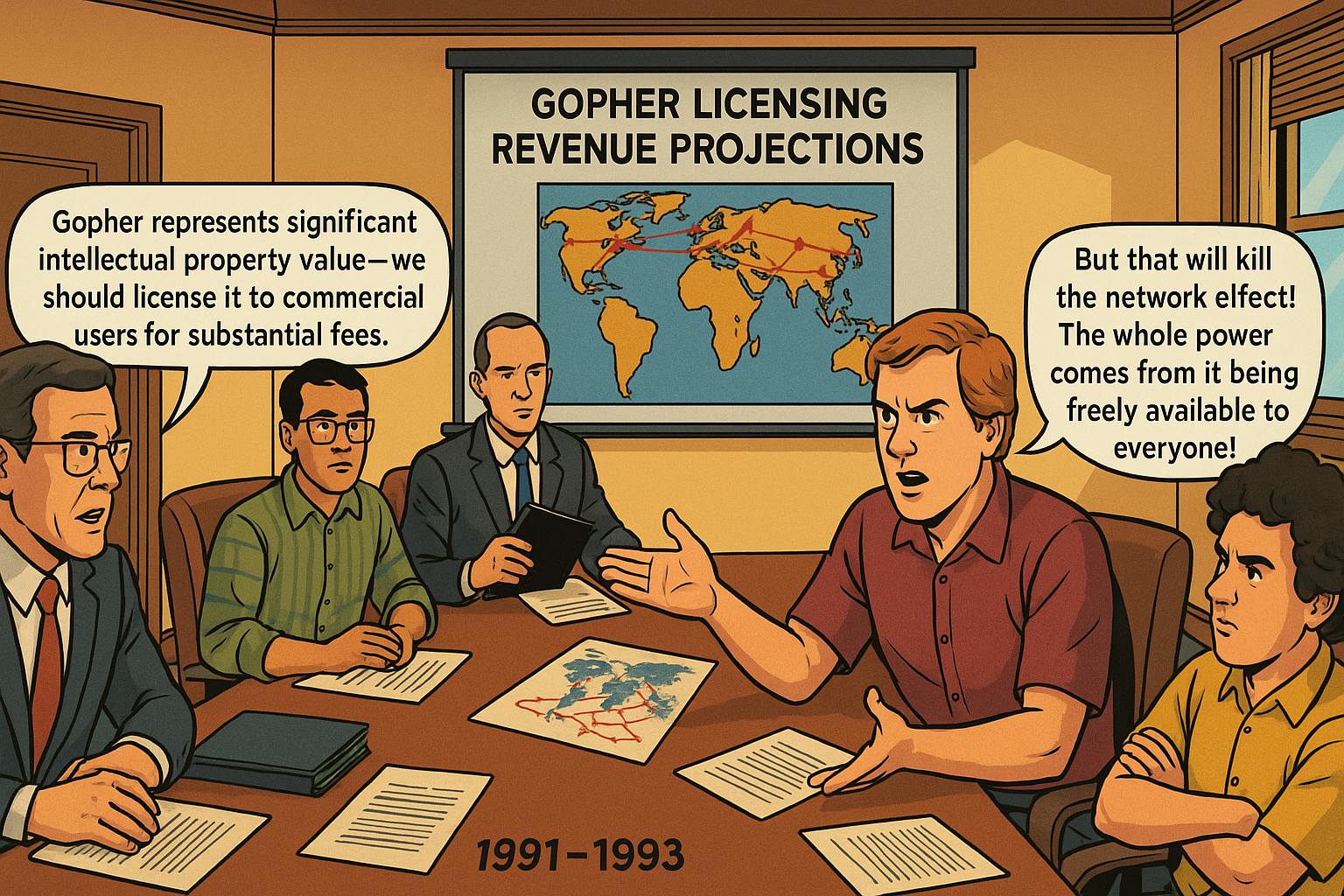
In February 1993, the University of Minnesota announced it would charge licensing fees for commercial use of Gopher. This decision shattered the trust that had fueled its growth, embodying a reverse Tragedy of the Commons.
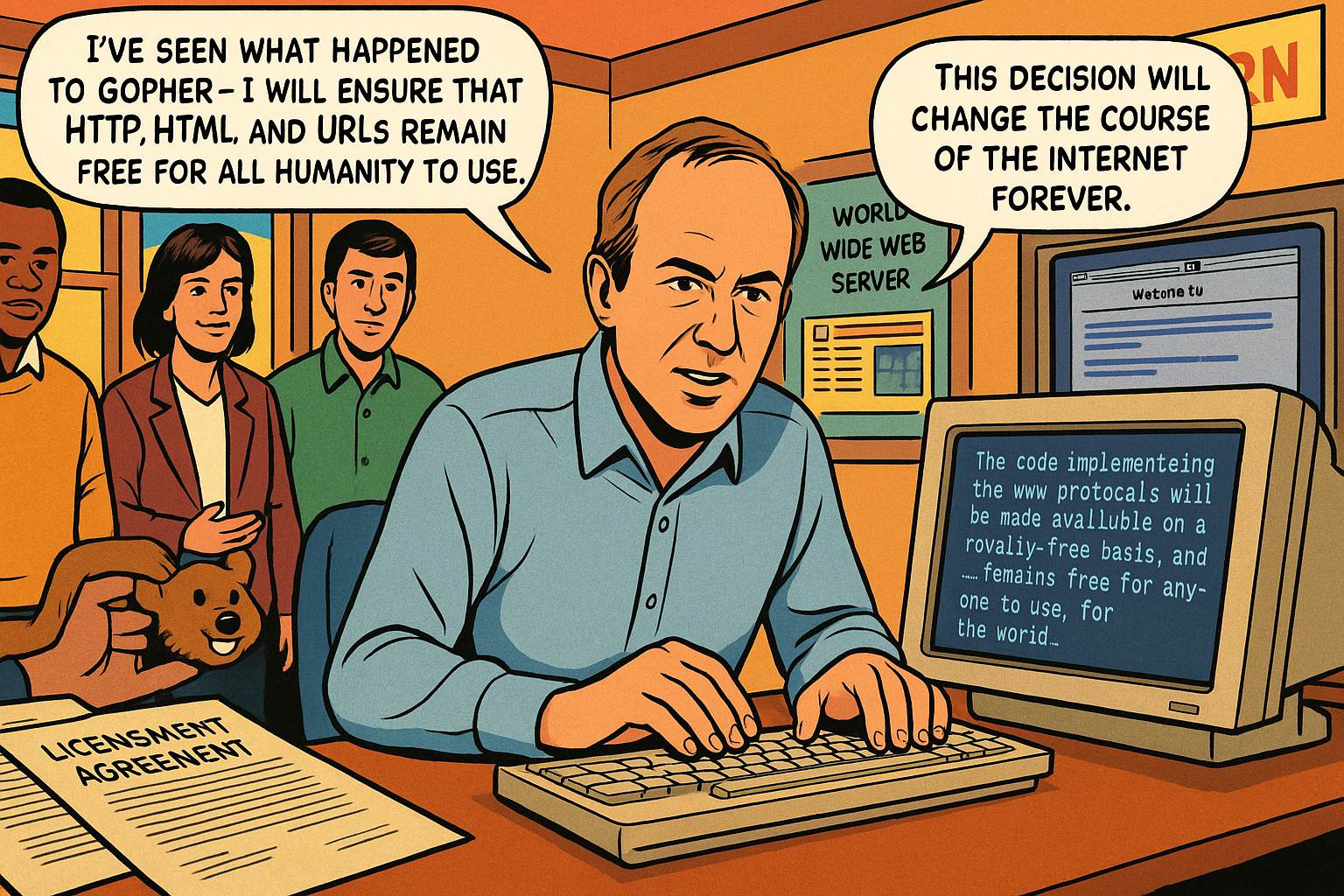
Witnessing Gopher's downfall, Tim Berners-Lee and CERN placed the World Wide Web protocols (HTTP, HTML) into the public domain on April 30, 1993.
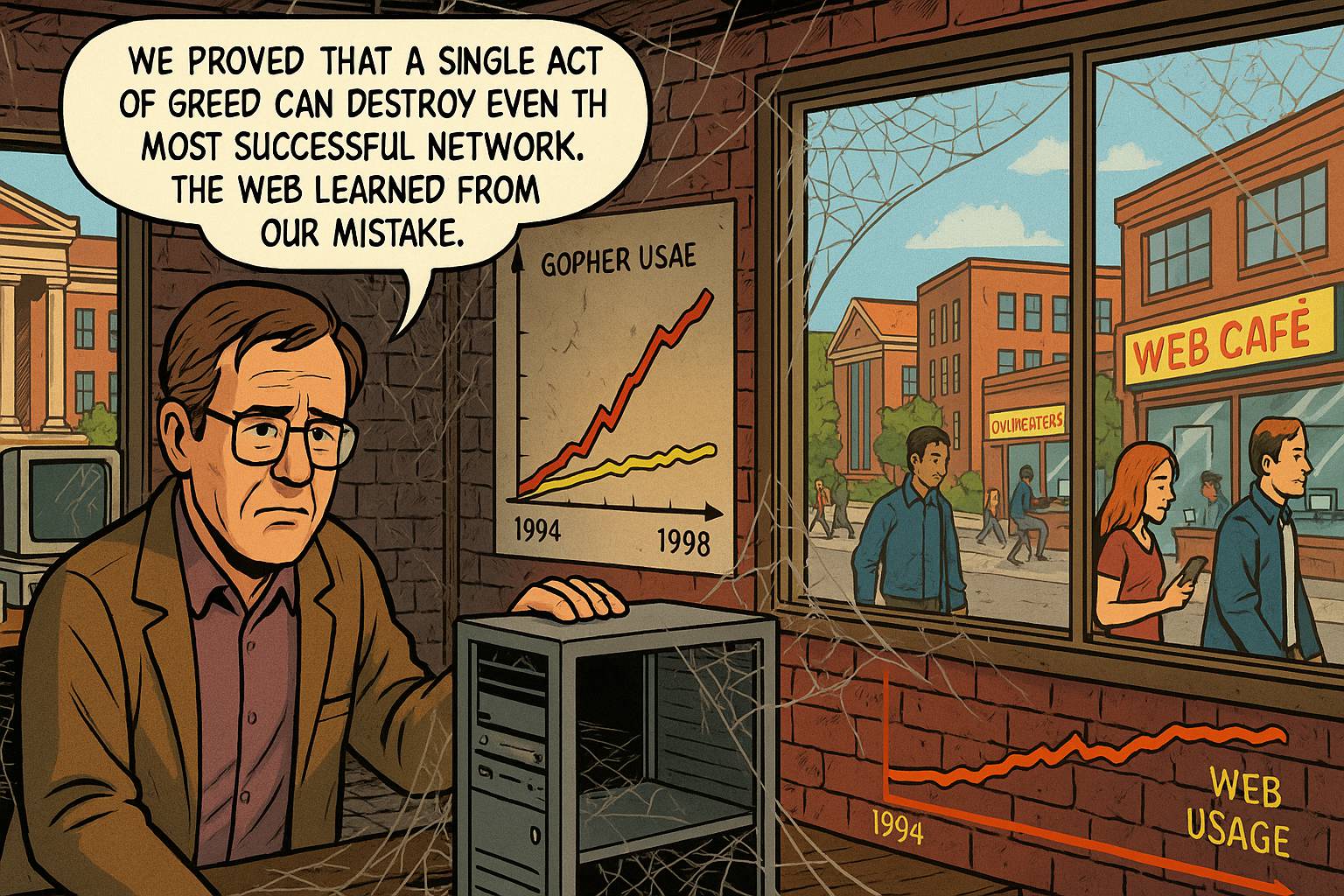
By the late 1990s, Gopher was effectively dead. The network effects that once drove its growth now powered the Web's explosive expansion. The Mosaic browser made the Web's advantages obvious to everyone.
The Gopher story reveals crucial principles about networks, trust, and unintended consequences.
The value of a network protocol depends not just on technical merits, but on trust that it will remain accessible to all participants.
When controllers of a common resource try to extract excessive value, they can destroy the resource entirely.
Once network effects shift from one standard to another, the transition can be swift and irreversible.
Tim Berners-Lee's decision to keep web protocols free was a small action that had enormous systemic impact on entire ecosystems.
Once the Web gained momentum, its guaranteed openness created reinforcing loops that made it increasingly dominant.
The University's attempt to profit achieved the opposite goal, destroying rather than capturing value.
Get answers to common questions about the Gopher protocol story and its lessons.
Gopher was a simple, menu-driven system developed in 1991 at the University of Minnesota by Mark McCahill to help users navigate information scattered across different computer systems.
Its popularity exploded due to its simplicity and accessibility. Users could navigate hierarchical menus with basic commands, and its open protocol allowed rapid adoption by the academic community, creating powerful network effects.
In February 1993, the university announced it would charge licensing fees for commercial use of the Gopher protocol, a decision that broke the trust of the internet community and triggered a reverse Tragedy of the Commons.
In April 1993, he and CERN formally placed the World Wide Web's technologies (HTTP, HTML) into the public domain, guaranteeing they would remain free and open forever.
The Web's guaranteed openness built trust, which accelerated its network effect. It also offered richer content like images and flexible hyperlinks, making it a more powerful platform. The Mosaic browser provided an intuitive graphical interface that made the Web's advantages obvious.
Gopher's death established openness as a fundamental principle of internet governance, ensuring that core protocols should be free for all to use and build upon. This principle became foundational to the internet's development.
Learn the key steps to creating and maintaining successful open protocols based on the lessons from this story.
Create an accessible and easy-to-use solution to a common problem. Simplicity often drives initial adoption more than technical sophistication. Gopher's success came from its elegant simplicity.
Release the technology as an open protocol to encourage widespread adoption, community participation, and innovation without permission. This creates the foundation for network effects.
Build trust by guaranteeing the protocol will remain free and unencumbered by proprietary claims or retroactive fees. This is the foundation of the network effect. Tim Berners-Lee understood this principle perfectly.
Foster a community that builds tools, creates content, and adds value to the ecosystem, creating a positive, reinforcing feedback loop that drives growth and prevents the Tragedy of the Commons.